Dragonfly Walk Sat 18th June 2016

DRAGONFLY WALK – SAT JUNE 18th  – Walk Leader Dr Bill Wain.          

If you would like to join this walk please email walksandtalks@www.froylewildlife.co.uk. This helps us to have an idea of numbers and to wait for anyone who may be delayed. However, if you are a last minute decision-maker, please just turn up on the day! We hope to see several species and pick up some tips on identification (see British Dragonfly Society) after our talk in March.

Meet at Froyle Village Hall at 10am. Our first site is within walking distance of the hall but transport will be provided if necessary. The second site, most likely along the River Wey, will require walking boots. Binoculars are handy for a closer view and here is the link to species seen last summer in Froyle. Hope to see you there.

Update: Some photos of sightings on our walk.
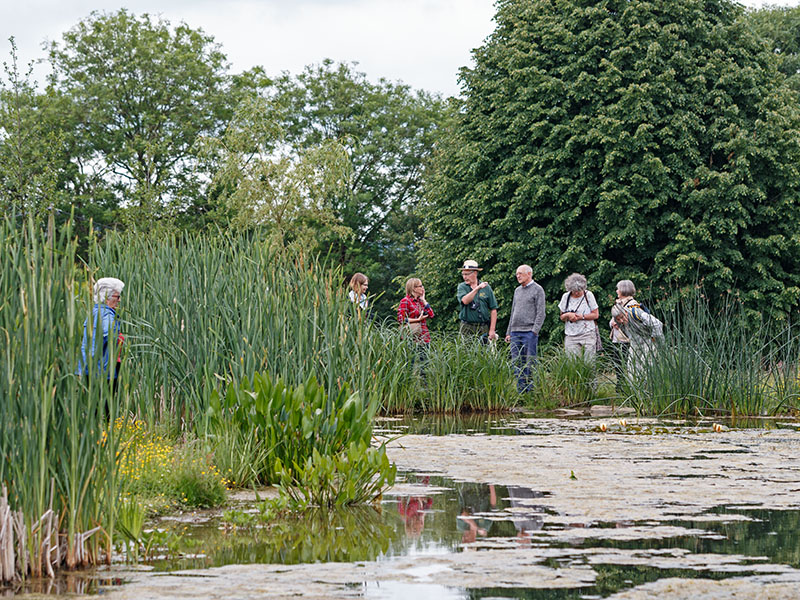
Wildlife pond Froyle
Emperor Dragonfly exuvia
Common Blue damselfly
Emerging dragonfly
Emerging dragonfly
Azur damselfly
Azur damselfly
Finding a froglet
Finding a froglet

At a pond in Lower Froyle, Bill Wain spotted over 20 exuvia (empty skins) of Emperor Dragonfly that had recently emerged. A Common Blue Damselfly allowed close views while stationary and an emerging dragonfly on the flag iris leaves was probably a Four-spot Chaser. The absence of any sunshine meant that none were flying.

Bluebell Walks 2016 Summary

BLUEBELL WALKS IN APRIL 2016- FROYLE ESTATE

Thanks to the invitation from Froyle Estate, 30 Froyle residents were able to enjoy walks in Hawkins Wood to see the carpets of bluebells, amongst other plants, on two occasions in April this year. Thanks also to Sue C who led the walks with great enthusiasm and knowledge.

1771 Froyle woodlands12lHawkins Wood is semi-natural ancient woodland which is thought to be at least 400 years old. This is borne out by looking at the 1771 survey of Froyle woodlands. The area shown here is the same area of woodland as depicted in current maps.
Woodland has been essential for the daily life of folk for the majority of its existence, enabling bowls, cutlery, buildings and furniture to be made, and of course providing vital firewood. Coppicing was regularly carried out to provide wood; this in turn opened up the forest floor to light, allowing ground flora to establish. Hawkins Wood is a SINC, (Site of Importance for Nature Conservation) and as a habitat is irreplaceable. Plants can be used as indicators for ancient woodland.

Froyle bluebells 3The Bluebell has been voted as top of England’s favourite wildflowers. In the past the bluebell sap was used to fix feathers on to arrows, and as a starch for Tudor ruffs. Globally wild bluebells are scarce and the UK has 40-50% of the World’s population. Unfortunately, the non-native Spanish bluebell is in danger of pushing out our native bluebell, through crossbreeding with it.

As well as the glorious bluebells, other ancient woodland plant indicators that were seen on the walk included Yellow Archangel, Wood Anemone, Barren Strawberry, Early Dog-violet, Primrose, Wood Sorrel, the imaginatively named Townhall Clock with delicate flowers facing in 4 directions, and Toothwort, again appropriately named for its tooth like appearance, a plant that is parasitic on tree roots.

Froyle bluebells 2Amongst the trees it was interesting to see a coppiced beech tree, measuring 7.6m in girth, thought to be at least 300 years old. The coppiced wood may well have been used by bodgers to make chair legs in years gone by.

Jayne F.

Swift Talk 2016 Summary – Nest site creation in Froyle?

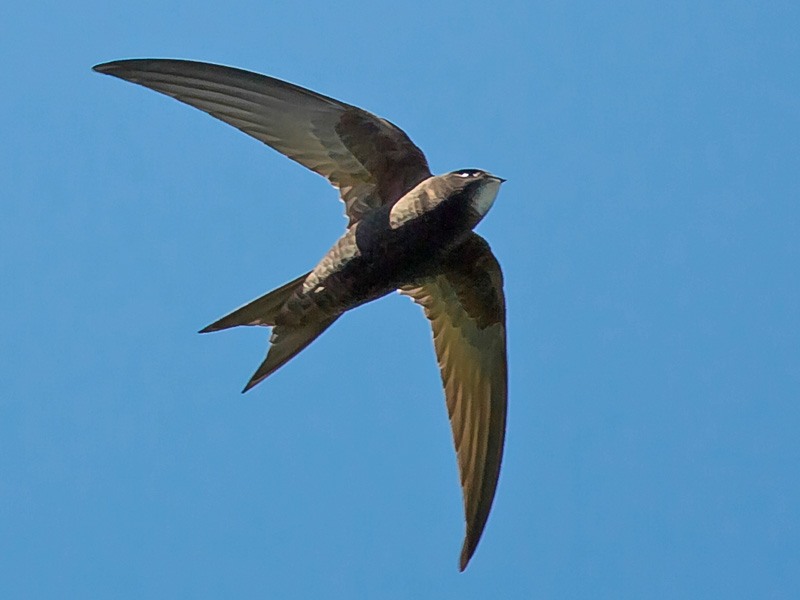
Swift talk FroyleEdward Mayer delighted over 50 people with his enthusiastic and inspirational talk on swifts (and a little on swallows). As well as bringing that uplifting sound of summer, these amazing birds are superbly skilful flyers and they drink, feed and even mate in flight!

Across the UK It is estimated 11,000 new nests sites need to be created just to halt the decline of this amazing bird. We don’t make things easy for them – Swifts mate for life and are faithful to each other. They seek to return to the same nest site year after year. Renovations such as loft insulation and re-roofing, and conversions or demolitions can mean swifts fly 14,000 miles back to the UK only to find their nest sites are no longer there or cannot be accessed. Swift in flightModern architectural and home ‘greening’ practices are also making it harder for swifts to replace the sites that are lost and for young swifts to find their first home.

Despite the issues, Edward’s uplifting message was how easy it is for people to incorporate, replace or create new nest sites. In Froyle we have the perfect opportunity to help our local populations to survive and thrive so that swifts remain a beautiful sight and sound for us to enjoy every summer.
Swift bricks & nest boxes are relatively inexpensive and can be fitted to new builds and during any renovation work to roofs, soffits and guttering. Imagine the positive contribution to swifts if every home in Froyle had just one swift brick or nest box!

The swift conservation website has details of nest-boxes and bricks. The lowest cost option is a self-assembly plywood nest-box for use under eaves or on walls. The two models plus a sound recording to help attract swifts can be purchased for £15 / £17 plus postage. Built-in swift bricks start at £25. (http://www.swift-conservation.org/Shopping!.htm).

If you would like to support our local populations of swifts and want to learn more, we have a local group “Hampshire Swifts”. They can be contacted via Andy Broadhurst (andy@tali.me.uk). The group has a website (www.hampshireswifts.co.uk) and a Facebook group (www.facebook.com/groups/HampshireSwifts) .

The ‘Hampshire Swifts ‘website link takes you to the swift survey page. Please record any 2016 sightings you make so that Hampshire’s swift records are up to date and accurate.

Finally, if you think a village-wide initiative to create new nest sites is a good idea please let us know!

Swifts “Keeping the Skies Alive” 12th May 2016

If you love the sight and sound of swifts in high summer then this is the talk for you.

Swift in flightThis amazing acrobatic bird drinks, preens, collects food and nesting material, and even mates on the wing! We are very fortunate to see their evening acrobatics and hear their characteristic screaming in Froyle as swifts have declined nationally by almost half over the past decade. Their preference to repair and reuse the same nests which are often lost during building and renovation work, coupled with a steep decline in their food supply (flying insects and airborne spiders), makes life challenging for them. The RSPB reports that within 20 years swifts will become rare in the UK unless action is taken to help them.

Our speaker, Edward Mayer, has loved Swifts since childhood. He has set up ‘Swift Conservation‘, a web-based advice service celebrating swifts. He provides advice to government, building professionals and the public.  Edward will talk about the challenges facing swifts. He will also cover cost-effective and simple solutions to protect and encourage swifts (and similar looking summer migrants like swallows and house martins) when we renovate, build or rebuild. This will include how to create and maintain the habitats that encourage population growth of their food sources.

Edward has been highly recommended to us as an excellent speaker and presenter.

PLEASE NOTE THE TALK WILL START AT 7pm, doors open from 6:30pm.
Entrance fee £2, refreshments available.
Donations welcome for Swift Conservation & Froyle Nature Conservation.
Raffle.


New pond near Gid Lane, April 2016

Start of pond excavations

Good news! Work started on the new pond near Gid Lane in April with permission from Froyle Park Ltd. The contractor digging the pond is expected take 3-6 weeks and excavations can be seen from the footpath along the Lime Avenue. The project is funded by developer contributions through East Hampshire District Council. Once completed, our advice from wildlife pond experts is to let the pond colonise naturally over time, so please do not introduce any fish or pond plants.

Our planning application ref 56422/001 for the pond was approved by EHDC in February 2016 and here is a link for more information:- supporting statement, site location plan and pond plan. The bare soil exposed by the ground works will be sown with tussocky grass and wildflower meadow seed. This is dependant on soil conditions and seasonal timing. After the works are finished and the ground prepared for wildflower seed sowing there will be permitted access for members of ‘Froyle Wildlife’, a group that anyone can join.

Progress updates: Photo of levelling the pond perimeter, view from the Lime Avenue and the filled pond.

Levelling the perimeterFroyle Pond 3Froyle Pond 4

Bluebell walks 17 and 23 April 2016

Bluebells in semi-natural ancient woodland

By kind invitation of Froyle Estate

Come and enjoy the bluebells and other spring flowers off the beaten track.  A guided woodland walk of about 2 hours and 1.8 miles on Saturday 23rd April at 10am and on Sunday 17th April at 2pm. The tracks are wet and muddy so boots or wellies essential (especially after Friday’s rain). No dogs please.

Contact by email info@www.froylewildlife.co.uk if you’d like to come so we have an idea of numbers and check if postponed due to poor weather.

Updates: The planned walk on Saturday 16th was postponed because of persistent showers all morning. The rescheduled date is Saturday 23rd April 10am but please be aware that it may be slippery underfoot.

Thanks to Froyle Estate for their invitation to us. Both walks had some sunshine to enjoy the woodland wild flowers and bluebells. Plants seen included ancient woodland indicator species such as yellow archangel, wood sorrel, town hall clock, early dog-violet, and the parasitic toothwort.The shape of Hawkins Wood in a 1771 survey is the same as todays OS map. Here are some photos including a veteran coppiced beech tree that is 7.6m circumference.

Froyle bluebells 0Froyle bluebells 1Froyle bluebells 2Froyle bluebells 3Froyle bluebells 4

Walks and talks 2016 list

Froyle Wildlife – Walks & Talks – 2016    DAIRY DATES

  • Tuesday 15th March –  “A Dragonfly’s World”. A talk by Dr. Bill Wain – Village Hall – 7:30pm start.
  • Tuesday 12th April – “The River Wey”. A talk by Dr. June Chatfield – Village Hall – 7:30pm start.
  • Thursday 12th May – “ Keeping the Skies Alive – Helping  Swifts & Swallows survive the 21st Century”.  A talk by Edward Mayer – Village Hall – 7:00pm start.
  • Saturday 18th June “Dragonfly Walk”. Walk Leader – Dr Bill Wain; Meet at the Village Hall at 10:00 am.
  • Saturday 23rd July “The Magic of Bees” – Talk & Walk.    Speaker/Leader: Mike Edwards; Meeting Point – TBC.    Talk 9:30 – 10:30 am; Walk 10:45 – 1:00 pm.
  • Saturday in September –  “Wildlife at Mill Farm”. Walk Leader Nick & Jenny Shaylor; Meeting Point & Date – TBC.
  • Thursday 20th October – “Return of the Red Kite” + AGM. A talk by Keith Betton  – Village Hall – 7:30pm  start.  Wine and nibbles will be served before the AGM.
  • November (provisional) – “Wildlife & Hedgerows”. A talk by Jon Stokes – Village Hall – Date & time TBC.

It’s helpful for us to have an idea on numbers – If possible please email walksandtalks@www.froylewildlife.co.uk. However, you are very welcome just to turn up too!

  • Entrance fee: £2. (Children under 16 free).
  • Donations to the speaker’s charitable organisation  and Froyle Wildlife Group.
  • Doors open 30 minutes before the start of the talks.
  • Light refreshments inc. wine available.
  • Occasional raffle and other fund raising activities.

(Additional details on the speaker or walk leader will be published in advance of each event. Details of our fete activities + ad hoc summer butterfly walks to follow.

AGM and Barn Owl talk 30th Oct 2015

Barn OwlAll are invited to our short AGM followed by a talk about Barn Owls on Friday 30th October 2015 at 7.30pm in the village hall.  There will also be a display board showing some of the local wildlife seen and view an update of this year’s bird sightings in Froyle.  Non-members are welcome and drinks and nibbles will be available during the evening. Donations invited.

Small mammal identification 18th Oct 2015

Do you want to find out what runs about in our hedgerows especially at night? Come and join us on Sunday morning October 18th when John Buckley will lead us in identifying what small mammals have been temporarily caught in humane traps that were set earlier by kind permission of  Mill Farm, Isington.

Wood MouseChildren especially find it exciting, firstly to find out if anything has gone into the trap to find food and shelter, then to find out and identify the species, will it be a type of mouse or a vole? So children, get your parents to come along! For an ID guide click on link to download pdf.

There are a limited number of spaces available so if you are interested in joining us, we will meet at 8.45am on Sunday 18th October at the Village Hall to travel to the location. It is vital that you contact us by Tuesday October 13th so we know what resources will be needed.

Update 18th Oct: A count of 50 small mammals (bank vole, field vole, wood mouse, common shrew and water shrew) were seen at four locations. Adults and children all enjoyed close up views before they were released again.

Group1 Mill Farm Group2 Mill FarmBank voleCommon shrew

Stoat dances in Froyle September 2015

Lower Froyle resident Anne W. emailed us about a wonderful wildlife experience on 3rd September 2015.

“Looking out of my window at the back of the garden I saw a stoat performing the most amazing “dance”.   It cavorted all over the grass, twisting and turning, leaping high in the air, somersaulting, tearing up and down the garden.   A few months ago on a nature programme I saw a film of a stoat doing exactly what I was privileged to be watching.   I did not know that we had one in the garden.   Because I was so fascinated by it, I am not sure how long it lasted – perhaps 1/2 hour.”

Stoat image BBCFor a BBC video clip of this dancing behaviour of stoats see http://www.bbc.co.uk/programmes/p0074tkf

image_print