On the 23rd July come along and hear about “The Magic of Bees” followed by a walk to see what’s buzzing in Froyle. – Meet at the Village Hall at 10am. We will be visiting the rec and nearby gardens. Please check this website page if weather conditions look uncertain. We are fortunate – our walk leader, Mike Edwards, co-authored the ‘Field Guide to Bumblebees of Great Britain and Ireland’!
We have lived in Froyle now for nearly 12 years, relatively new residents compared to many, but every day I am appreciative of how lucky we are to live here, with the countryside and wildlife on our doorstep. This was highlighted on a recent two mile dog walk around Lower Froyle.
It was a gloriously sunny morning. We left our resident house martins behind in the nests around our house. After their long journey back from Africa we are hoping they will be successfully breeding, to help keep up, and perhaps swell, their ‘amber listed’ population. Shortly afterwards we encountered a Red Kite, another ‘amber listed’ bird, magnificently gliding low over the houses and gardens. ‘Amber list’ includes species where there is falling populations or contracting ranges.
Whilst walking close to the quarry, Skylarks were in songflight, some so high in the air that they were barely visible. This is a relatively common occurrence here, but not typical generally for the UK now as Skylarks are on the ‘red list’ of endangered or vulnerable species. In the hedgerow we heard the ‘little bit of bread and no cheese’ song of a Yellow Hammer, another species on the red list.
A Roe deer doe was standing in the shade of a tree at the edge of a field behind long grass. Luckily the wind must have been in its favour as the dogs were unaware of it. It remained there just watching us, perhaps it had a kid nearby.
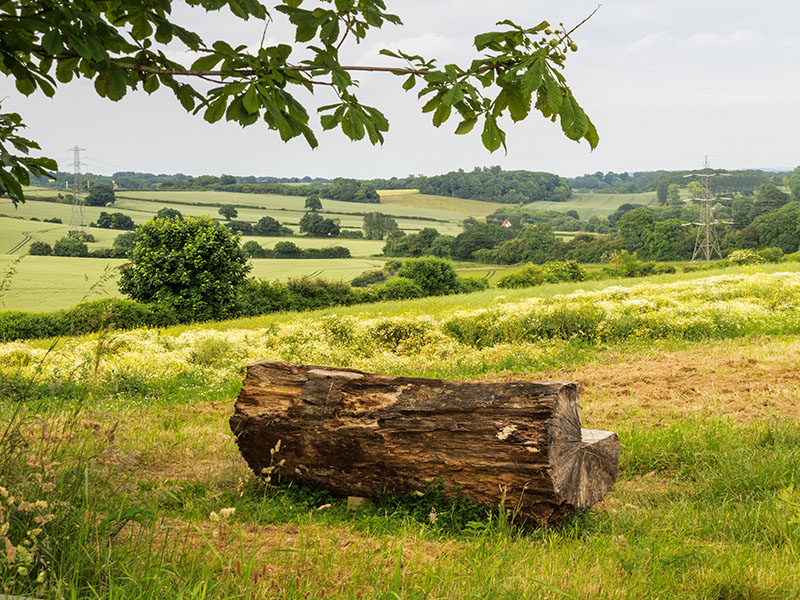
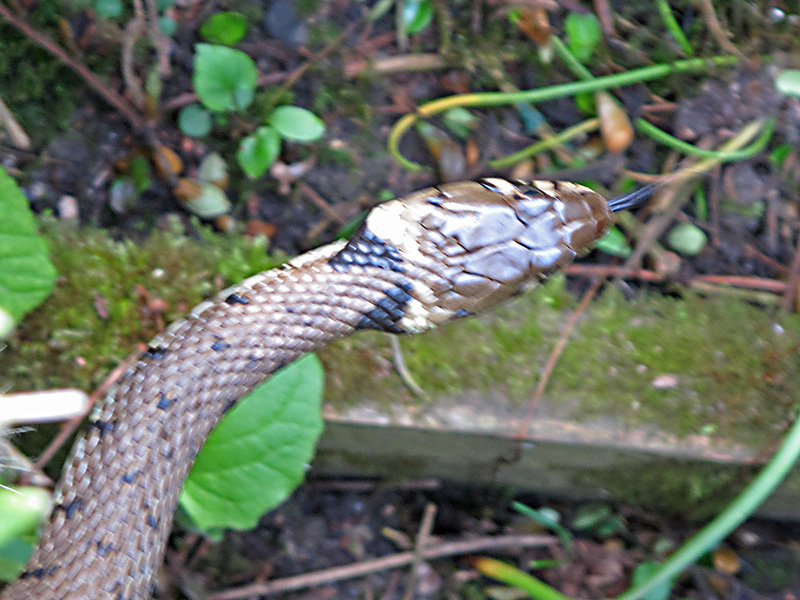
As usual we stopped to admire the view from the thoughtfully placed ‘tree bench’ at the top of Hussey’s Lane. On returning down the lane, a Grass Snake slithered back into the vegetation at the edge of the track, having been disturbed from basking in the sun by our footsteps. A Blackcap sang its melodic song further down the track.
Coming across the Recreation Field, we admired the blooms of the ‘Wildflower area’. Once back in our garden, the hedgehog droppings were evidence of a visitor or two the night before, presumably consuming the food that we put out for them each evening.
Whilst I appreciate this is by no means an exhaustive list of Froyle wildlife, I feel very fortunate to be able to experience the sorts of encounters mentioned above.
DRAGONFLY WALK – SAT JUNE 18th – Walk Leader Dr Bill Wain.
If you would like to join this walk please email walksandtalks@www.froylewildlife.co.uk. This helps us to have an idea of numbers and to wait for anyone who may be delayed. However, if you are a last minute decision-maker, please just turn up on the day! We hope to see several species and pick up some tips on identification (see British Dragonfly Society) after our talk in March.
Meet at Froyle Village Hall at 10am. Our first site is within walking distance of the hall but transport will be provided if necessary. The second site, most likely along the River Wey, will require walking boots. Binoculars are handy for a closer view and here is the link to species seen last summer in Froyle. Hope to see you there.
Update: Some photos of sightings on our walk.
Wildlife pond FroyleEmperor Dragonfly exuviaCommon Blue damselflyEmerging dragonflyAzur damselflyFinding a froglet
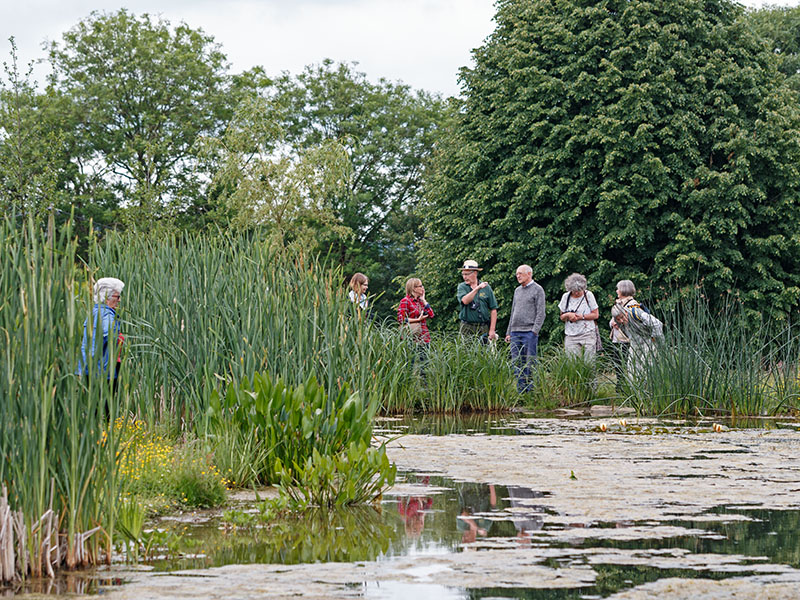
At a pond in Lower Froyle, Bill Wain spotted over 20 exuvia (empty skins) of Emperor Dragonfly that had recently emerged. A Common Blue Damselfly allowed close views while stationary and an emerging dragonfly on the flag iris leaves was probably a Four-spot Chaser. The absence of any sunshine meant that none were flying.
Thanks to the invitation from Froyle Estate, 30 Froyle residents were able to enjoy walks in Hawkins Wood to see the carpets of bluebells, amongst other plants, on two occasions in April this year. Thanks also to Sue C who led the walks with great enthusiasm and knowledge.
Hawkins Wood is semi-natural ancient woodland which is thought to be at least 400 years old. This is borne out by looking at the 1771 survey of Froyle woodlands. The area shown here is the same area of woodland as depicted in current maps.
Woodland has been essential for the daily life of folk for the majority of its existence, enabling bowls, cutlery, buildings and furniture to be made, and of course providing vital firewood. Coppicing was regularly carried out to provide wood; this in turn opened up the forest floor to light, allowing ground flora to establish. Hawkins Wood is a SINC, (Site of Importance for Nature Conservation) and as a habitat is irreplaceable. Plants can be used as indicators for ancient woodland.
The Bluebell has been voted as top of England’s favourite wildflowers. In the past the bluebell sap was used to fix feathers on to arrows, and as a starch for Tudor ruffs. Globally wild bluebells are scarce and the UK has 40-50% of the World’s population. Unfortunately, the non-native Spanish bluebell is in danger of pushing out our native bluebell, through crossbreeding with it.
As well as the glorious bluebells, other ancient woodland plant indicators that were seen on the walk included Yellow Archangel, Wood Anemone, Barren Strawberry, Early Dog-violet, Primrose, Wood Sorrel, the imaginatively named Townhall Clock with delicate flowers facing in 4 directions, and Toothwort, again appropriately named for its tooth like appearance, a plant that is parasitic on tree roots.
Amongst the trees it was interesting to see a coppiced beech tree, measuring 7.6m in girth, thought to be at least 300 years old. The coppiced wood may well have been used by bodgers to make chair legs in years gone by.
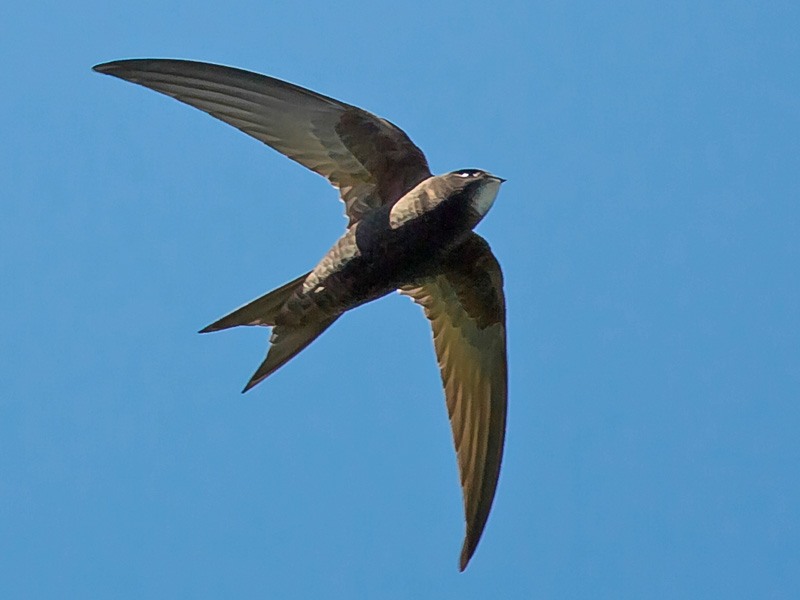
Edward Mayer delighted over 50 people with his enthusiastic and inspirational talk on swifts (and a little on swallows). As well as bringing that uplifting sound of summer, these amazing birds are superbly skilful flyers and they drink, feed and even mate in flight!
Across the UK It is estimated 11,000 new nests sites need to be created just to halt the decline of this amazing bird. We don’t make things easy for them – Swifts mate for life and are faithful to each other. They seek to return to the same nest site year after year. Renovations such as loft insulation and re-roofing, and conversions or demolitions can mean swifts fly 14,000 miles back to the UK only to find their nest sites are no longer there or cannot be accessed. Modern architectural and home ‘greening’ practices are also making it harder for swifts to replace the sites that are lost and for young swifts to find their first home.
Despite the issues, Edward’s uplifting message was how easy it is for people to incorporate, replace or create new nest sites. In Froyle we have the perfect opportunity to help our local populations to survive and thrive so that swifts remain a beautiful sight and sound for us to enjoy every summer.
Swift bricks & nest boxes are relatively inexpensive and can be fitted to new builds and during any renovation work to roofs, soffits and guttering. Imagine the positive contribution to swifts if every home in Froyle had just one swift brick or nest box!
The swift conservation website has details of nest-boxes and bricks. The lowest cost option is a self-assembly plywood nest-box for use under eaves or on walls. The two models plus a sound recording to help attract swifts can be purchased for £15 / £17 plus postage. Built-in swift bricks start at £25. (http://www.swift-conservation.org/Shopping!.htm).
The ‘Hampshire Swifts ‘website link takes you to the swift survey page. Please record any 2016 sightings you make so that Hampshire’s swift records are up to date and accurate.
Finally, if you think a village-wide initiative to create new nest sites is a good idea please let us know!
If you love the sight and sound of swifts in high summer then this is the talk for you.
This amazing acrobatic bird drinks, preens, collects food and nesting material, and even mates on the wing! We are very fortunate to see their evening acrobatics and hear their characteristic screaming in Froyle as swifts have declined nationally by almost half over the past decade. Their preference to repair and reuse the same nests which are often lost during building and renovation work, coupled with a steep decline in their food supply (flying insects and airborne spiders), makes life challenging for them. The RSPB reports that within 20 years swifts will become rare in the UK unless action is taken to help them.
Our speaker, Edward Mayer, has loved Swifts since childhood. He has set up ‘Swift Conservation‘, a web-based advice service celebrating swifts. He provides advice to government, building professionals and the public. Edward will talk about the challenges facing swifts. He will also cover cost-effective and simple solutions to protect and encourage swifts (and similar looking summer migrants like swallows and house martins) when we renovate, build or rebuild. This will include how to create and maintain the habitats that encourage population growth of their food sources.
Edward has been highly recommended to us as an excellent speaker and presenter.
PLEASE NOTE THE TALK WILL START AT 7pm, doors open from 6:30pm.
Entrance fee £2, refreshments available.
Donations welcome for Swift Conservation & Froyle Nature Conservation.
Raffle.
Good news! Work started on the new pond near Gid Lane in April with permission from Froyle Park Ltd. The contractor digging the pond is expected take 3-6 weeks and excavations can be seen from the footpath along the Lime Avenue. The project is funded by developer contributions through East Hampshire District Council. Once completed, our advice from wildlife pond experts is to let the pond colonise naturally over time, so please do not introduce any fish or pond plants.
Our planning application ref 56422/001 for the pond was approved by EHDC in February 2016 and here is a link for more information:- supporting statement, site location plan and pond plan. The bare soil exposed by the ground works will be sown with tussocky grass and wildflower meadow seed. This is dependant on soil conditions and seasonal timing. After the works are finished and the ground prepared for wildflower seed sowing there will be permitted access for members of ‘Froyle Wildlife’, a group that anyone can join.
Progress updates: Photo of levelling the pond perimeter, view from the Lime Avenue and the filled pond.
Come and enjoy the bluebells and other spring flowers off the beaten track. A guided woodland walk of about 2 hours and 1.8 miles on Saturday 23rd April at 10am and on Sunday 17th April at 2pm. The tracks are wet and muddy so boots or wellies essential (especially after Friday’s rain). No dogs please.
Contact by email info@www.froylewildlife.co.uk if you’d like to come so we have an idea of numbers and check if postponed due to poor weather.
Updates: The planned walk on Saturday 16th was postponed because of persistent showers all morning. The rescheduled date is Saturday 23rd April 10am but please be aware that it may be slippery underfoot.
Thanks to Froyle Estate for their invitation to us. Both walks had some sunshine to enjoy the woodland wild flowers and bluebells. Plants seen included ancient woodland indicator species such as yellow archangel, wood sorrel, town hall clock, early dog-violet, and the parasitic toothwort.The shape of Hawkins Wood in a 1771 survey is the same as todays OS map. Here are some photos including a veteran coppiced beech tree that is 7.6m circumference.
The River Wey illustrated talk is on Tuesday 12th April 2016 in Froyle Village Hall.
River Wey near Froyle Mill
This month we welcome Dr June Chatfield chairman of the Northern Wey Trust and local natural history expert. June will be giving an illustrated talk about the River Wey northern branch, including its passage through Froyle.
Do come along and find out more about our local river and its wildlife, all welcome. Doors open at 7pm for 7.30pm start, entrance £2, refreshments. For other events download a list of our ‘walks and talks’.
With March recorded as the coldest for 50 years there was not much incentive to get cracking in the garden. Nevertheless things were beginning to stir outside with a brimstone butterfly through the garden on the 5th March and what a welcome sight that was. Crocus, hellebore, winter flowering honeysuckle and lungwort kept the bees happy when it was warm enough for them to venture out, the latter a favourite of the hairy-footed flower bee Anthophora plumipes (a solitary bee). By the end of Mayorange tip, holly blue, peacock, comma, large and green-veined white butterflies had been noted (primrose, sweet rocket, honesty, forget-me-nots and Bowles Mauve perennial wallflower helping to provide nectar) and eggs of the orange tip found on garlic mustard and honesty. Everything was a few weeks behind and the seemingly endless cold spring continued….
Orange Tip on Honesty
June was largely cold; the winter quilt was still on the bed! However the brimstones had been busy laying eggs on buckthorn but only a meadow brown had been added to the butterfly list. A pretty poor year so far for many insects with the knock on effect that birds had to search even harder for anything they could find to feed their young. Swift Conservation reported that swifts were dropping dead from the sky through starvation across parts of Europe. In our patch sparrows keenly searched the roses for greenfly to feed their young – a good reason not to use insecticide.
Red Admiral on Tithonia rotundifolia
A week into July and things begin to hot up, moths with intriguing names – ruby tiger, peach blossom, elephant hawk-moth conveniently settle on the back wall under our house light and have a brief moment of fame as we turn our cameras on them. By the end of Julysmall white, small tortoiseshell, large skipper, red admiral, gatekeeper and ringlet butterflies had made an appearance. Brimstones, known for sipping nectar from runner beans and perennial pea, also used buddleia, lavender, hyssop and the lovely orange annual Tithonia rotundifolia. Gatekeepers with shorter proboscis preferred the large patches of marjoram – glad I didn’t reduce the size of them as intended, this plant also attracted many tiny day flying mint moths – Pyrausta aurata whose larvae feed on this and mint. Our wild field scabious is growing in completely the wrong place reaching 5 foot high in our fertile vegetable plot (there’s not an awful lot of veg.- have we lost the plot?) This plant is a favourite with bees, hoverflies, butterflies and moths and birds like the seed. Late night forays down the garden with a torch reveal moths on field scabious, hemp agrimony and buddleia. The garden is baked dry, no slugs or snails and the earthworms have gone deep underground. A pair of blackbirds desperately searching for food for their young are grateful for extra morsels including meaty cat food which also helps to keep 3 hedgehogs going. Topping up the bird baths and water bowls a daily task.
Woolcarder Bee on Lamb’s EarsElephant Hawk-moth on back doorVolucella zonaria on Field Scabious
Mid August, the weather is lovely and the garden overgrown. A huge teasel scratches us as we pass by but is attracting butterflies and bees and goldfinch will be attracted to its seed later so it stays. The Hollyhocks are so tall we can hardly see the bumblebees foraging in the flowers. The largest hoverfly found in Britain, Volucella zonaria a hornet mimic, is attracted to field scabious and buddleia and looked mighty fearsome but like all hoverflies has no sting, is harmless to us and a useful pollinator. Only the marmalade hoverfly was seen in any numbers with 50 or so attracted to nettle-leaved bellflowers. A Male wool-carder Anthidium manicatum (solitary bee) feistily patrols a patch of Wall Germander Teucrium chamaedrys in the front garden and anotherguards lambs ears in the back. Mesmerising to watch, they dart and hover over their territory and pounce on any other bees regardless of species wrestling them off the plants – The pouncing technique is also used to mate but the pair remain on the plant. The females collect hairs from lamb’s ears Stachys lanata and other hairy plants for use in their brood cells.
Speckled Wood on Marjoram
But back to the butterflies and everyone is remarking on the number and variety in their gardens. Lots of peacocks and more small tortoiseshell in our garden than for many years but numbers still way down from the highs of the early 1990’s. Whites are everywhere, dancing over the buddleia, old English lavender, and Verbena bonariensis. Single dahlias, buddleia, borage, tithonia, all good bee plants, are keeping us busy dead heading. By the end of Augustspeckled wood made an appearance and brown argus, common blue and silver-washed fritillary butterflies had dropped by, if only briefly, to take nectar. Early September and the spectacular day flying hummingbird hawk-moth arrives, zipping like lightning between flowers high up on the Beijing Buddleia, evading all attempts to get a passable photograph. A warm autumn could see red admirals and commas attracted to Michaelmas daisies, fallen rotting fruit and ivy flowers, the latter also a magnet for moths, bees, hoverflies and wasps. It’s been a joy to share our garden with butterflies and other creatures – here’s to next year. For ideas on what to plant see ‘Gardening for Butterflies’.
Post script: According to Butterfly Conservation, three-quarters of UK butterflies are showing a decrease in either their distribution or population levels. The State of Nature report 2013 reveals how all our wildlife is faring and the RSPB annually publishes The State of the UK’s Birds. There is a wildlife gardening forum at www.wlgf.org/.