Flora recording Upper Froyle 8th May 2022

Flora recording amble on Sunday 8th May, around Froyle organised by Alton Natural History Society. Walk led by botanist Isobel Girvan, meet 10am at Froyle Village Hall.

Bugle

This joint project with Alton Natural History Society recording plant species in Froyle started in 2021 as an update to a previous survey in 1991. The variety of locations surveyed includes roadside verges, field and wood edges alongside public rights of way as well as other areas with landowner’s permission.

All welcome, come and find out what plants occur locally and learn to identify them. See link to Froyle churchyard.

image_print

Attracting Wildlife to your Garden, talk 13th April 2022

Find out about a variety of projects that you can take in your garden in order to attract wildlife. Susan Simmonds will cover both large and small actions ranging from window boxes to creating wildlife ponds. She will look at some of the pollinator plants you might like to consider introducing to the garden and talk about the huge benefits of some of our very common plants such as dandelions and ivy.

All welcome to join this virtual meeting via Zoom, talk starts 7.30pm, free for members, £3 non-members.

Note:- The Zoom invitation will be emailed beforehand to members and to those on our mailing list. Anyone else who wants to join the meeting can request an invitation through our contact us page.

Susan has a lifelong passion for wildlife and has worked in the conservation sector for Hampshire & Isle of Wight Wildlife Trust (HIWWT) for over 20 years. She is also a sessional lecturer at Sparsholt College and enjoys passing on her knowledge through running training courses like plant species identification and mammal tracks and signs.

See blogs written by Susan https://www.hiwwt.org.uk/blog/-susan-simmonds and a series of short YouTube videos https://www.youtube.com/results?search_query=%27susan+simmonds%27.


Summary written after an excellent talk: The chief take-away for attracting wildlife in your garden is to let your garden grow wild! Those present who happened to also be members of Froyle Gardening Club were faced with a dilemma. Do we tidily weed our gardens or do we allow these native plants to flourish because they are well-liked by pollinators (dandelions, germander speedwell), or are good for butterflies to lay their eggs on (nettles, garlic mustard), or provide nesting places for birds and hibernation sites for butterflies (brambles and ivy)? Susan also suggested that we leave at least some of our lawn to be uncut and we might be surprised what springs up – Susan found a wild orchid. Alternatively, you can scarify or remove a section of turf and sow wild flower seeds – it could just be a small patch.
Non-weed plants that benefit wildlife include mixed native hedges (buckthorn is used by brimstone butterflies), honeysuckle (for moths), scabious (for many pollinators), primrose (for bee-flies). Be aware that some ‘pollinator friendly’ plants at non-organic nurseries may have been sprayed with pesticides!
Less of a dilemma was the introduction of a pond. It helps to have a shallow edge or ‘beach’ for easy access by amphibians and also some marginal planting such as water mint or purple loosestrife. The wildlife, including dragonflies and newts, will find their own way there. But don’t stock it with fish as they will gobble them up. Also, log piles and ‘bug hotels’ allow insects such as ladybirds and cardinal beetles to overwinter, and compost heaps do the same for slow worms and grass snakes. Blogs written by Susan Simmonds can be found at https://www.hiwwt.org.uk/blog/-susan-simmonds.                 Nigel H

image_print

Talk about ‘Bird Songs and Calls’ 24th March 2022

We welcome Hampshire’s County Bird Recorder, Keith Betton, to tell us about the songs and calls of birds around Froyle – using recordings and photos. Keith lives in Farnham and is an author and broadcaster, and apart from previous talks to our group you may have spotted him on BBC TV’s Springwatch programme.

Doors open Froyle Village Hall 7pm for talk to start at 7.30pm. All welcome, entrance £3 for non members, members free. As a precaution, some windows will be open for ventilation, chairs will be spaced and we encourage you to wear a mask. A list of names attending will be kept.

Do you know the difference between the song of a Robin and Wren? Or do you just enjoy hearing a Springtime dawn chorus. Find out why birds sing and how to identify them just by listening. The RSPB has some examples on their website at https://www.rspb.org.uk/birds-and-wildlife/bird-songs/what-bird-is-that/ of the common birds you’ll find in and around your garden or local area.

Keith appeared in Springwatch 2021 with Chris Packham episode 4 to visit a Stone Curlew nest in Hampshire, see https://www.bbc.co.uk/iplayer/episode/m000wgzw/springwatch-2021-episode-4 and forward the recording to 48min 30sec.


Summary written after an entertaining and informative talk:  ‘Bird Song Around Froyle’ In March, Hampshire’s County Bird Recorder Keith Betton gave an enjoyable and informative talk on bird song that can be heard in Froyle. Keith explained that birds sing to establish and maintain a territory, and to attract a female. That is not to say that singing is restricted exclusively to male birds. Female Robins for example sing in Winter when they separate from their partner and establish their own territory for a time.
Keith used recordings from the Collins Bird Guide app (available for Apple and Android devices) to illustrate the songs of birds likely to be seen and heard in Froyle. Some of the more striking songs of the common birds are the rich ‘chocolatey’ song of the Blackbird, the note and phrase repeats delivered by the Song Thrush, and the powerful, loud and fast song of the tiny Wren. If you hear a bird of prey in Froyle, it is most likely to be the mewing sound of the very vocal Buzzard. Other notable sounds include the territorial tree drumming of the Great Spotted Woodpecker. The Green Woodpecker on the other hand mainly uses it’s loud ‘yaffle’ or ‘laughing’ call instead. The quality and variety of bird song is important to the birds themselves. When attracting a mate, the variety of sounds a male has in his repertoire suggests to a female that he is an older, more experienced, individual who would make a good partner to start her next family.
Getting to know songs of birds is helpful to identify the presence of birds that are not easily seen, such as the Bullfinch, and to identify birds that look alike. For example, the Chiffchaff and Willow Warbler look similar (apart from different coloured legs), but they sound very different indeed.
Keith closed by updating us on the Peregrines nesting on Winchester Cathedral. Live streaming on the nest activities is viewed by many people around the world. The link is: https://www.winchester-cathedral.org.uk/explore/peregrines/.          Alan D

image_print

How do butterflies survive the winter?

When the weather turns cold, you may wonder what happens to these insects. Winter poses a problem for butterflies as they cannot get warm enough to become active.  They enter a dormant phase either as an egg, larva, pupa or adult insect, dependent upon species.  This isn’t simply a random choice but is a way of ensuring that the insect’s awakening the following year corresponds with the peak availability of its main food source.  Amazingly the Painted Lady avoids winter conditions completely by migrating long distances to regions in North Africa and the Middle East.

Eggs, larvae and pupae tend to be hidden away, though you may find Large White pupae attached to the walls of your house.  Those species that overwinter as dormant adults include Brimstone, Small Tortoiseshell, Peacock and Comma.  The Red Admiral, which has become a common sight in British winters of late, doesn’t enter a proper dormancy but can become active on any suitable sunny days.

The Comma has its name written on the underside in the only white marking, which resembles a comma. When resting with wings closed this butterfly has excellent camouflage, the jagged outline of the wings giving the appearance of a withered leaf, making the butterfly inconspicuous when resting on a tree trunk or when dormant in winter.

The sea urchin-shaped eggs of the Brown Hairstreak are laid singly on the bark of blackthorn, typically on one- or two-year old growth that is in a sheltered area exposed to the sun.  Within the 1mm pin-head sized egg, the larva partially develops before entering hibernation for the winter.  Overwintering eggs are particularly vulnerable to hedge-trimming since they are laid on the youngest growth of the foodplant.

The Orange Tip pupa (or chrysalis) is formed on an upright plant stem that provides a suitable overwintering site, attached by a silk thread girdle.  Green when first formed, the pupa turns light brown to more-closely match its surroundings.  Several crucifers are used as foodplants, especially Cuckooflower in damp meadows and Garlic Mustard along road verges.  It also lays its eggs on Honesty and Sweet Rocket in gardens. The chrysalis will not survive winter if the plant stems are cut down before the adult butterfly emerges in spring.  Leaving part of your garden naturally unkempt helps to benefit other wildlife aswell.

Barry C.

image_print

The Holly and the Ivy, December 2021

The Holly and the Ivy are words of this traditional Christmas carol, thought to have Pagan origins and could date back over 1000 years. Holly (Ilex aquifolium) and Ivy (Hedera helix) were taken indoors during the winter, the hope being that the occupants would endure the cold season just as these hardy plants do.  In addition, they are both brilliant for wildlife, their flowers benefit pollinators and their berries are eaten by birds.

Stroll past any ivy clad wall or tree on a sunny day in late summer and early autumn and you will see a myriad of bees, flies, wasps and butterflies attracted to the rich nectar and pollen offering. A study by Sussex University demonstrated how significant ivy’s presence is to insects. During September and October they showed that the majority of pollen pellets collected by honey bees were from ivy. Hoverflies were also observed to be particularly frequent visitors. Ivy even has its own specialists, including the Ivy Bee (Colletes hedera).

The Holly Blue butterfly (Celastrina argiolus) generally has two generations each year the first in early spring emerging well before other blue butterflies. It tends to fly high around bushes and trees, whereas other grassland blues usually stay near ground level.  It is by far the commonest blue butterfly to found in gardens with a second generation flying July to September.  The larvae feed predominantly on the flower buds, berries and terminal leaves of Holly in the spring generation, and on Ivy in the summer generation.

Although holly berries are often ripe by autumn, birds such as song thrushes, blackbirds, fieldfares and redwings don’t usually feed on them until late winter. The dry pith of ivy berries contains nearly as many calories, weight for weight as Mars bars! In most cases, while the bird digests the pith and juice, the seeds travel undamaged through the bird’s gut, and may be dropped many miles from the parent plant.

image_print

AGM and talk ‘My favourite British Wildlife locations’ 21st October 2021

Join us for a talk by Tom Mabbett from Naturetrek about ‘The Best of Britain: From Ardnamurchan to the Forest of Dean’ on Thursday 21st October. Tom will cover his favourite wildlife locations across the UK from the “wild west” of Scotland to his local Forest of Dean. Appreciating what is close to home and on our doorstep has never been more important and Tom will also talk about some local wildlife discoveries and the joy and excitement of finding wildlife on your home patch, including an introduction to camera trapping. All welcome to join this virtual meeting via Zoom, pictorial AGM review starts at 7pm, talk starts 7.30pm, free for members, £3 non-members.

Note:- The Zoom invitation will be emailed beforehand to members and to those on our mailing list. Anyone else who wants to join the meeting can request an invitation through our contact us page.

Tom has worked at Naturetrek in nearby Chawton since 2013 and is a tour leader and operations manager. Tom says ‘I have been fascinated by wildlife for as long as I can remember. Even from infant school days I recall going along a hedge in the playground and turning the leaves which had holes in, hoping to find a caterpillar, putting bugs in pots and keeping jars of frogspawn. I’m not sure how or why but I was obsessed with birds. I was always putting bread out for the masses of Starlings we had then and staring endlessly at the garden feeders, trying to figure out what everything was.’


image_print

Look out for Hedgehogs in Froyle

Are you fortunate to have a hedgehog in your garden? Having been several years since seeing any in our garden, we were delighted recently to see the little black ‘calling cards’ that are evidence a hedgehog has spent some time visiting ours. I’m sure many of you will be aware of the severe decline in hedgehog numbers across the UK, including in the countryside. With this in mind there are several things we can do to help them.

They start to hibernate in October. However, if they are underweight they won’t survive over the Winter. Therefore, if you see a small hedgehog at the moment, this will be a young hedgehog, also called a hoglet, please contact Hart Wildlife Rescue– www.hartwildlife.org.uk – who should be able to take the hoglet and build it up, so it can be safely released next Spring.

Also please be very careful with strimming.  Sadly hedgehogs are often seen injured post strimming and the damage inflicted is usually too severe for them to survive. If you are going to be building bonfires, please bear in mind a hedgehog will think this is a great place to rest in, and so please check them carefully before lighting, or ideally light them straight after building them.

There are other things that will help to make your garden hedgehog friendly including:

•           ensuring a pond has a ramp for them to use

•           creating a wild corner

•           stopping using chemicals

•           putting out food and water

If you are interested to find out further information about how you can help hedgehogs, the people’s trust for endangered species (ptes) has initiated Hedgehog Street, a joint campaign in conjunction with the Hedgehog Preservation Society. Further details can be found at www.ptes.org.

Jayne Fisher

image_print

Swifts need your help, Froyle August 2021

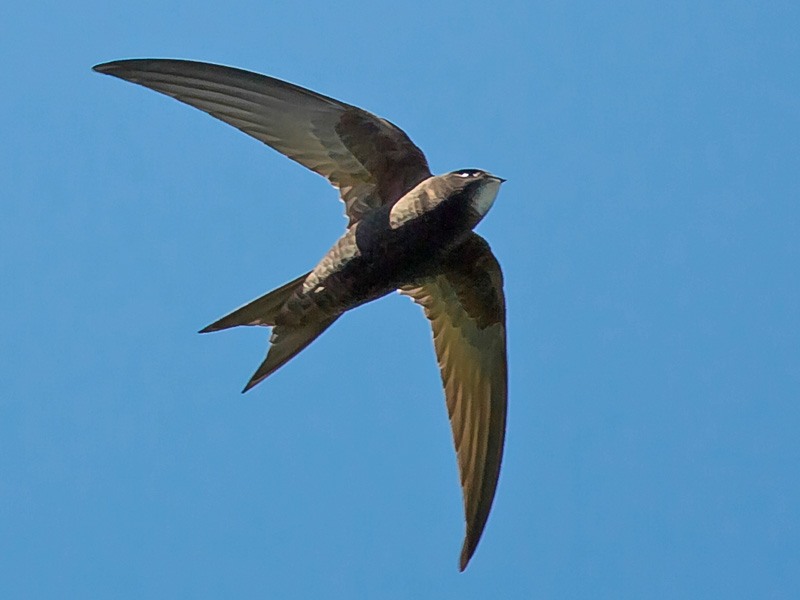
Swifts, the iconic ‘birds of Summer’, are in trouble. These beautiful and charismatic birds have declined across Hampshire and the UK by more than 50% over the last 23 years, see www.swift-conservation.org/.  The plummeting in their numbers is believed to be due to a big reduction in available nesting sites. However, it has been shown that if nesting places are once again provided, with either nest boxes or swift bricks, this can significantly boost local swift populations.

By mid-August the swifts that we all enjoyed over Froyle this Summer with their aerial displays will be heading back to their African wintering skies. Amazingly an adult swift can fly 7500km in just 5 days!  However, we can think ahead for next year, when the swifts return in late April/early May, aiming to maximise the number of swift nest sites that are ready and available to them, thus helping to boost swift numbers in future years.

Tim Norris from Hampshire Swifts www.hampshireswifts.co.uk/ is happy to check your house to see whether you have a suitable site for a nest box.  He and a colleague can then provide and fit a nest box for you. There is a small charge for this. Tim has fitted some nest boxes in Lower Froyle this Summer, and these have already attracted visits from swifts – please see photo on left. This bodes well for their intended use next year.

If you are interested, and would like to see whether you might be able to help with siting of swift nest boxes around Froyle, please contact info@www.froylewildlife.co.uk.

Jayne Fisher

image_print

‘Drop-in’ at Froyle wildlife pond 10th and 17th July 2021

Update: The weather last Saturday 10th at the original ‘drop-in’ was wet in the morning and cool overcast in the afternoon. So although the wildflowers were splendid, most of the dragonflies, butterflies and bees stayed hidden in the vegetation. The weather forecast is hot and sunny for this Saturday 17th July, so come along anytime 10am to 4pm at an additional ‘drop-in’ to see what’s flying and flowering.

Call in anytime between 10am and 4pm on Saturday 10th July 2021 to visit the wildlife pond and meadow, near Gid Lane, Upper Froyle (see plan). There should be plenty to see especially if it’s a sunny day. No need to book, anyone can just pop in to see what you can spot. Please ensure social distancing during your visit.
Members of Froyle Wildlife will be on hand to assist with identification of wildflowers, dragonflies and butterflies. Wildflower species to look out for include; knapweed, lady’s bedstraw, sainfoin, self heal, purple loosestrife, water figwort and bird’s-foot trefoil. Last year were 14 species of butterfly, 6 species of dragonfly/damselfly, ladybirds, hoverflies, bees and grasshoppers were noted on the July ‘drop-in’ day.

Image gallery: A selection of photos taken on the drop-in days sent in by members (Kelvin, Carol, Geoff, Gillian, Barry, Sue and Jim) are shown below. Click on the thumbnail image for a larger view.


image_print

Froyle Wildlife pond ‘an absolute pleasure’ 3rd June 2021

Carol sent us photos and wrote about their visit to Froyle …

I am a newish member having joined in 2020 to watch a Froyle Wildlife talk last November, and I’d been meaning since then to venture out from Alton to have a look at the pond on Gid Lane.  So when the Orchid walk in North Warnborough Greens was cancelled this week, myself and my husband decided it would be a good opportunity to do something ‘Froyle Wildlife’ connected and visit the pond!

What an absolute pleasure it was.  So beautifully peaceful while seated on a tree stump and surrounded by yellow and pink – a froth of Buttercups, and patches of Ragged Robin.  The pond resplendent with swathes of Water Crowfoot on either side.

Walking round the mown paths I came across new discoveries for me – subsequently identified as a Common Carpet moth, Azure Damselflies, a Large Red Damselfly and some Bladder Campion.   In the pond itself I saw a tiny Ramshorn Snail, and a Greater Water Boatman. Finally, seated again, I spotted what turned out to be a Thick-legged Flower Beetle on a nearby buttercup.  Previously seen once before in Devon, a few years ago.

What a joyful experience in a delightful sanctuary of wildlife and flowers.


image_print