Join us for a 7.30am morning walk on Saturday 2nd May to see and hear some of Froyle’s birds. Keith Betton, chair of Hampshire Ornithological Society, will be leading this guided bird walk. Keith is an entertaining and highly knowledgeable guide. The walk will start at The Anchor Inn in Lower Froyle, (parking permitted), at 7.30am, and is expected to last approximately 2 to 2.5 hours. We will 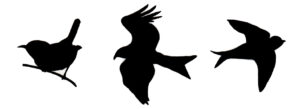 explore Hussey’s Lane and some surrounding fields.
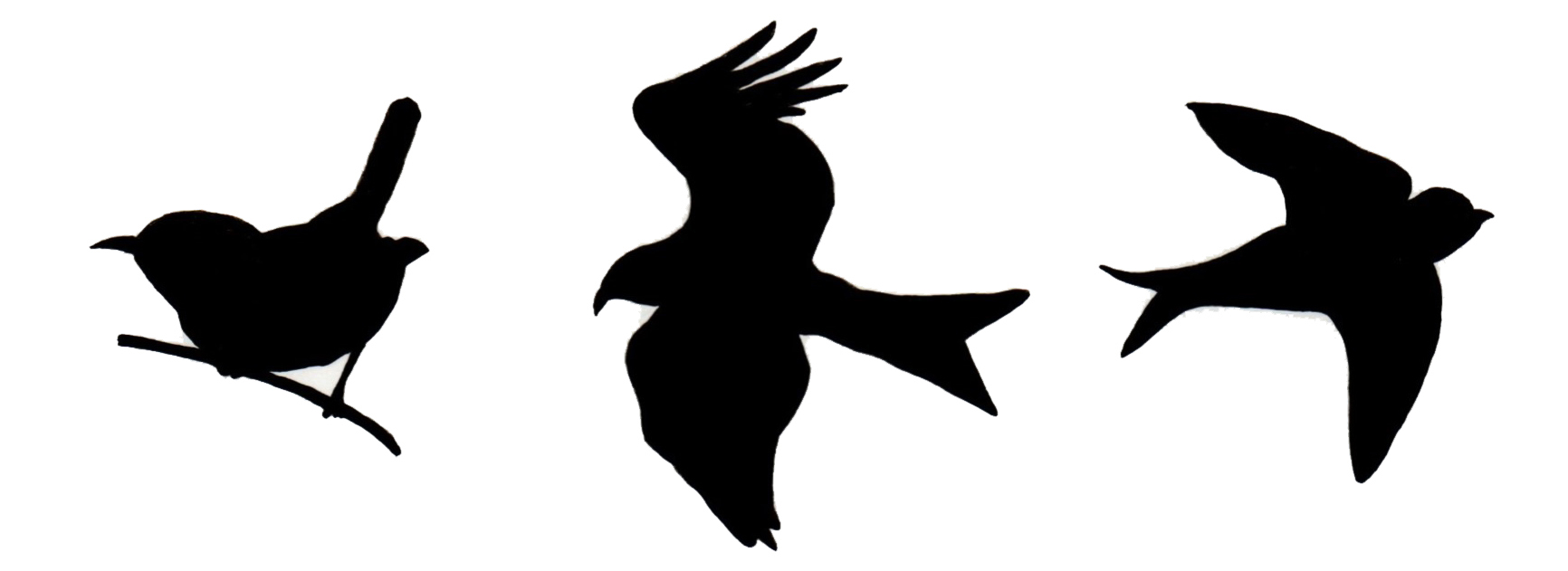
Do you recognise the silhouettes of a wren, red kite and house martin? Binoculars will be useful for bird spotting, and appropriate footwear in case it’s muddy. The Anchor Inn will be open for optional coffee and breakfast on our return. Both Froyle Wildlife members and non-members are welcome on this walk that is during the weekend of the International Dawn Chorus Day. No dogs please.
Summary of the walk. Keith Betton is one of the top birders in the World, having seen just shy of 9000 species. He was very informative about each of the birds we identified. We heard and/or saw 33 species of birds over the two hour walk. A list of the birds seen and/or heard were:-
Blackbird, Blackcap, Blue Tit, Canada Goose, Chaffinch, Chiffchaff, Collared Dove, Dunnock, Goldcrest, Goldfinch, Great Tit, Greenfinch, House Sparrow, Jackdaw, Lapwing, Magpie, Mallard, Mistle Thrush, Moorhen, Pheasant, Red Kite, Robin, Rook, Skylark, Song Thrush, Starling, Stock Dove, Swallow, Swift, Whitethroat, Woodpigeon, Wren, Yellowhammer.
The wrens were singing their usual incredibly loud song, considering their diminutive size. Keith explained that the hairs that are responsible for hearing in their ears are able to regrow in wrens, in light of their song being so loud it can deafen them! There were both adult and juvenile Rooks flying over, the latter being distinguishable by virtue of having a full black beak whereas the upper part of the beak in adults is white. During flight it can be possible to see a sac below the beak of adult rook, in which they are carrying many insects back for their young.
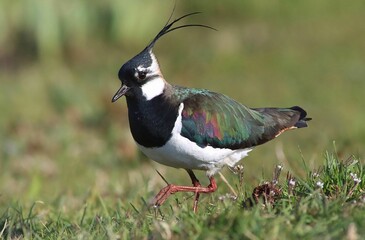
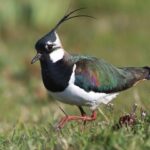 It was a treat to hear and see several Lapwing, possibly nesting. These are a Red Listed bird, their population having declined by 55% since the 1960s due to agricultural changes. The Lapwing is also known as the peewit in imitation of its display calls. The name ‘lapwing’ relates to its wavering flight, as they zigzag through the skies.
A male yellowhammer, also a Red Listed species, with its striking yellow plumage was nicely perched on top of a hedge, enabling us all to get good views. We encountered White throats and Swifts, both just returning to the UK, having overwintered in Africa.
The song of the male Skylark, one of the finest songsters of the bird world, accompanied us in several locations. These are another Red Listed bird, but we are fortunate to have them around Froyle. They are unusual as they can breath in and out while singing, thus enabling them to sing continuously for 2 minutes. They gradually ascend while the song is delivered, in hovering flight, up to typically heights of 50 to 100 metres, before parachuting back down to earth! In addition we enjoyed the melodic songs of the Blackbird, Songthrush and Blackcap amongst others.
A scientific study, published earlier this year, showed that paying attention to birdsong can boost wellbeing and bring down stress levels. We all enjoyed the walk, and were grateful to Keith for having helped to open our eyes and ears to the birds around Froyle.
Jayne Fisher
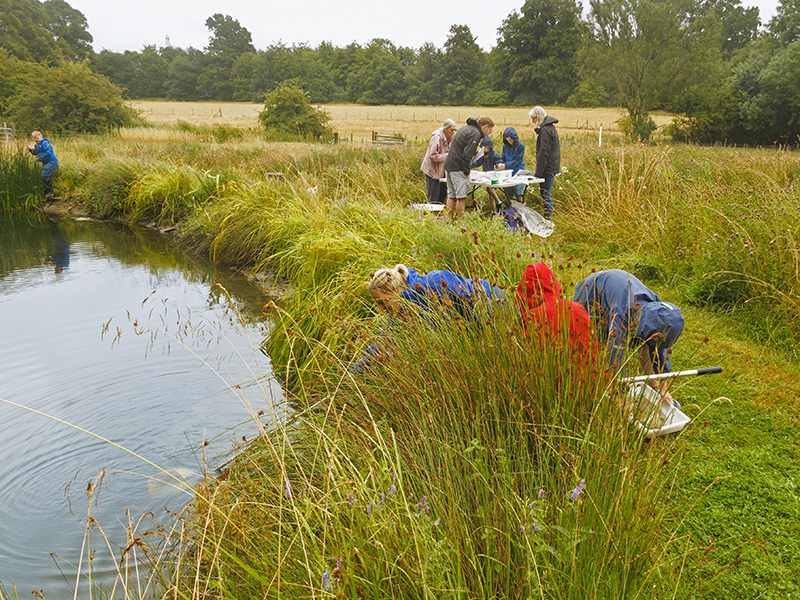 for a 1 hour dipping session to see what underwater creatures we can find in the Froyle Wildlife pond, Gid Lane. Children will need to be accompanied by a responsible adult. All equipment will be provided and numbers at this popular event are limited, so it is essential to book by emailing info@froylewildlife.co.uk, stating preference for 10am or 11.15am session.