Talk about ‘Bird Songs and Calls’ 24th March 2022

We welcome Hampshire’s County Bird Recorder, Keith Betton, to tell us about the songs and calls of birds around Froyle – using recordings and photos. Keith lives in Farnham and is an author and broadcaster, and apart from previous talks to our group you may have spotted him on BBC TV’s Springwatch programme.

Doors open Froyle Village Hall 7pm for talk to start at 7.30pm. All welcome, entrance £3 for non members, members free. As a precaution, some windows will be open for ventilation, chairs will be spaced and we encourage you to wear a mask. A list of names attending will be kept.

Do you know the difference between the song of a Robin and Wren? Or do you just enjoy hearing a Springtime dawn chorus. Find out why birds sing and how to identify them just by listening. The RSPB has some examples on their website at https://www.rspb.org.uk/birds-and-wildlife/bird-songs/what-bird-is-that/ of the common birds you’ll find in and around your garden or local area.

Keith appeared in Springwatch 2021 with Chris Packham episode 4 to visit a Stone Curlew nest in Hampshire, see https://www.bbc.co.uk/iplayer/episode/m000wgzw/springwatch-2021-episode-4 and forward the recording to 48min 30sec.


Summary written after an entertaining and informative talk:  ‘Bird Song Around Froyle’ In March, Hampshire’s County Bird Recorder Keith Betton gave an enjoyable and informative talk on bird song that can be heard in Froyle. Keith explained that birds sing to establish and maintain a territory, and to attract a female. That is not to say that singing is restricted exclusively to male birds. Female Robins for example sing in Winter when they separate from their partner and establish their own territory for a time.
Keith used recordings from the Collins Bird Guide app (available for Apple and Android devices) to illustrate the songs of birds likely to be seen and heard in Froyle. Some of the more striking songs of the common birds are the rich ‘chocolatey’ song of the Blackbird, the note and phrase repeats delivered by the Song Thrush, and the powerful, loud and fast song of the tiny Wren. If you hear a bird of prey in Froyle, it is most likely to be the mewing sound of the very vocal Buzzard. Other notable sounds include the territorial tree drumming of the Great Spotted Woodpecker. The Green Woodpecker on the other hand mainly uses it’s loud ‘yaffle’ or ‘laughing’ call instead. The quality and variety of bird song is important to the birds themselves. When attracting a mate, the variety of sounds a male has in his repertoire suggests to a female that he is an older, more experienced, individual who would make a good partner to start her next family.
Getting to know songs of birds is helpful to identify the presence of birds that are not easily seen, such as the Bullfinch, and to identify birds that look alike. For example, the Chiffchaff and Willow Warbler look similar (apart from different coloured legs), but they sound very different indeed.
Keith closed by updating us on the Peregrines nesting on Winchester Cathedral. Live streaming on the nest activities is viewed by many people around the world. The link is: https://www.winchester-cathedral.org.uk/explore/peregrines/.          Alan D


AGM and talk ‘My favourite British Wildlife locations’ 21st October 2021

Join us for a talk by Tom Mabbett from Naturetrek about ‘The Best of Britain: From Ardnamurchan to the Forest of Dean’ on Thursday 21st October. Tom will cover his favourite wildlife locations across the UK from the “wild west” of Scotland to his local Forest of Dean. Appreciating what is close to home and on our doorstep has never been more important and Tom will also talk about some local wildlife discoveries and the joy and excitement of finding wildlife on your home patch, including an introduction to camera trapping. All welcome to join this virtual meeting via Zoom, pictorial AGM review starts at 7pm, talk starts 7.30pm, free for members, £3 non-members.

Note:- The Zoom invitation will be emailed beforehand to members and to those on our mailing list. Anyone else who wants to join the meeting can request an invitation through our contact us page.

Tom has worked at Naturetrek in nearby Chawton since 2013 and is a tour leader and operations manager. Tom says ‘I have been fascinated by wildlife for as long as I can remember. Even from infant school days I recall going along a hedge in the playground and turning the leaves which had holes in, hoping to find a caterpillar, putting bugs in pots and keeping jars of frogspawn. I’m not sure how or why but I was obsessed with birds. I was always putting bread out for the masses of Starlings we had then and staring endlessly at the garden feeders, trying to figure out what everything was.’


Look out for Hedgehogs in Froyle

Are you fortunate to have a hedgehog in your garden? Having been several years since seeing any in our garden, we were delighted recently to see the little black ‘calling cards’ that are evidence a hedgehog has spent some time visiting ours. I’m sure many of you will be aware of the severe decline in hedgehog numbers across the UK, including in the countryside. With this in mind there are several things we can do to help them.

They start to hibernate in October. However, if they are underweight they won’t survive over the Winter. Therefore, if you see a small hedgehog at the moment, this will be a young hedgehog, also called a hoglet, please contact Hart Wildlife Rescue– www.hartwildlife.org.uk – who should be able to take the hoglet and build it up, so it can be safely released next Spring.

Also please be very careful with strimming.  Sadly hedgehogs are often seen injured post strimming and the damage inflicted is usually too severe for them to survive. If you are going to be building bonfires, please bear in mind a hedgehog will think this is a great place to rest in, and so please check them carefully before lighting, or ideally light them straight after building them.

There are other things that will help to make your garden hedgehog friendly including:

•           ensuring a pond has a ramp for them to use

•           creating a wild corner

•           stopping using chemicals

•           putting out food and water

If you are interested to find out further information about how you can help hedgehogs, the people’s trust for endangered species (ptes) has initiated Hedgehog Street, a joint campaign in conjunction with the Hedgehog Preservation Society. Further details can be found at www.ptes.org.

Jayne Fisher


Swifts need your help, Froyle August 2021

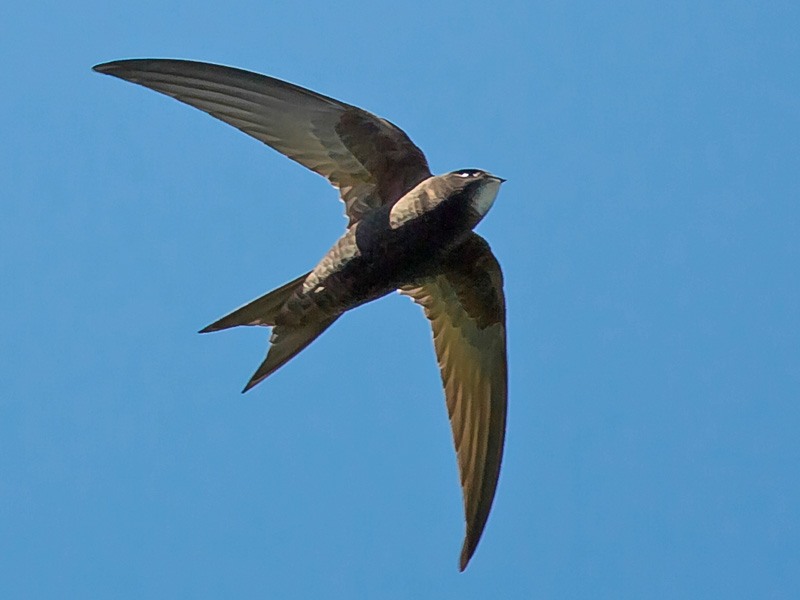
Swifts, the iconic ‘birds of Summer’, are in trouble. These beautiful and charismatic birds have declined across Hampshire and the UK by more than 50% over the last 23 years, see www.swift-conservation.org/.  The plummeting in their numbers is believed to be due to a big reduction in available nesting sites. However, it has been shown that if nesting places are once again provided, with either nest boxes or swift bricks, this can significantly boost local swift populations.

By mid-August the swifts that we all enjoyed over Froyle this Summer with their aerial displays will be heading back to their African wintering skies. Amazingly an adult swift can fly 7500km in just 5 days!  However, we can think ahead for next year, when the swifts return in late April/early May, aiming to maximise the number of swift nest sites that are ready and available to them, thus helping to boost swift numbers in future years.

Tim Norris from Hampshire Swifts www.hampshireswifts.co.uk/ is happy to check your house to see whether you have a suitable site for a nest box.  He and a colleague can then provide and fit a nest box for you. There is a small charge for this. Tim has fitted some nest boxes in Lower Froyle this Summer, and these have already attracted visits from swifts – please see photo on left. This bodes well for their intended use next year.

If you are interested, and would like to see whether you might be able to help with siting of swift nest boxes around Froyle, please contact info@www.froylewildlife.co.uk.

Jayne Fisher


‘Drop-in’ at Froyle wildlife pond 10th and 17th July 2021

Update: The weather last Saturday 10th at the original ‘drop-in’ was wet in the morning and cool overcast in the afternoon. So although the wildflowers were splendid, most of the dragonflies, butterflies and bees stayed hidden in the vegetation. The weather forecast is hot and sunny for this Saturday 17th July, so come along anytime 10am to 4pm at an additional ‘drop-in’ to see what’s flying and flowering.

Call in anytime between 10am and 4pm on Saturday 10th July 2021 to visit the wildlife pond and meadow, near Gid Lane, Upper Froyle (see plan). There should be plenty to see especially if it’s a sunny day. No need to book, anyone can just pop in to see what you can spot. Please ensure social distancing during your visit.
Members of Froyle Wildlife will be on hand to assist with identification of wildflowers, dragonflies and butterflies. Wildflower species to look out for include; knapweed, lady’s bedstraw, sainfoin, self heal, purple loosestrife, water figwort and bird’s-foot trefoil. Last year were 14 species of butterfly, 6 species of dragonfly/damselfly, ladybirds, hoverflies, bees and grasshoppers were noted on the July ‘drop-in’ day.

Image gallery: A selection of photos taken on the drop-in days sent in by members (Kelvin, Carol, Geoff, Gillian, Barry, Sue and Jim) are shown below. Click on the thumbnail image for a larger view.


Froyle Wildlife pond ‘an absolute pleasure’ 3rd June 2021

Carol sent us photos and wrote about their visit to Froyle …

I am a newish member having joined in 2020 to watch a Froyle Wildlife talk last November, and I’d been meaning since then to venture out from Alton to have a look at the pond on Gid Lane.  So when the Orchid walk in North Warnborough Greens was cancelled this week, myself and my husband decided it would be a good opportunity to do something ‘Froyle Wildlife’ connected and visit the pond!

What an absolute pleasure it was.  So beautifully peaceful while seated on a tree stump and surrounded by yellow and pink – a froth of Buttercups, and patches of Ragged Robin.  The pond resplendent with swathes of Water Crowfoot on either side.

Walking round the mown paths I came across new discoveries for me – subsequently identified as a Common Carpet moth, Azure Damselflies, a Large Red Damselfly and some Bladder Campion.   In the pond itself I saw a tiny Ramshorn Snail, and a Greater Water Boatman. Finally, seated again, I spotted what turned out to be a Thick-legged Flower Beetle on a nearby buttercup.  Previously seen once before in Devon, a few years ago.

What a joyful experience in a delightful sanctuary of wildlife and flowers.


North Warnborough Greens, walk 3rd and 7th June 2021

Update: Having visited the Greens on 2nd June and found only 2 orchids in leaf, we are cancelling the planned walks -as in flower was the aim. It’s a late season -cold April, wet May and flowering dates and orchid numbers will differ each year.
The Natural England condition report from 2020 says ‘Large numbers of southern marsh orchid are present throughout’.
It a pleasant location to visit now with Highland cattle are grazing part of the SSSI and Marsh Marigolds in flower.

Join us for a leisurely walk at North Warnborough Greens SSSI on either Thursday 3rd June 10am-12 or Monday 7th June 7pm. Managed by Hampshire Wildlife Trust, these flower rich wet meadows are adjacent to the River Whitewater and are home to a great variety of flower species. We hope to see both Early and Southern Marsh Orchids in flower. Please note that there are two dates because of limited parking nearby and small group size, so please let us know if you plan to attend by email to info@www.froylewildlife.co.uk.

Please observe social distancing and also as it may be wet underfoot do wear appropriate footwear. After our wander through the Greens, you can take an optional self-guided pleasant walk of about 1km over the ford to the Basingstoke canal footpath and then along to King John’s castle ruin.


‘Wildlife Photography – Tips and Experiences’ talk 15th April 2021

Join us on Thursday 15th April, 7.30pm for a talk via zoom about ‘Wildlife Photography – Tips and Experiences’ by Stephen Powles.

In this talk Stephen will look to inspire you to take up wildlife photography in its simplest form. He will then go on to give tips as to how one might progress to more challenging subjects and achieve better results. No need for a neck draped in fancy kit! It’s incredible what you can do using relatively simple equipment/mobile phones and by going no further than your garden. There is no need to be passionate about taking wildlife photographs to enjoy this presentation.

Formerly a vet, Stephen changed career to pursue a lifelong passion for wildlife, wildlife photography, filming and conservation. Stephen’s material has made a number of TV appearances, featured in the national press and won major awards. His photography concentrates on interesting and challenging wildlife subjects, many of which are in and close to his home.

Note: The zoom invitation will be emailed beforehand to members and to those on our mailing list. Anyone who would like to join the meeting can request an invitation.


‘HART Wildlife Rescue’ talk 4th March 2021

Join us on Thursday 4th March 7.30pm for a zoom talk by Paul Reynolds about ‘HART Wildlife Rescue’ -working in Hampshire to rescue British wildlife. Paul will introduce the work of Hampshire Animal Rescue Team (HART) and cover some interesting case studies as well as what to do if you find an animal in distress.

Located at Medstead near Alton, HART Wildlife runs a wildlife hospital, providing a rescue, treatment and rehabilitation service for wildlife from all over Hampshire and surrounding counties. Over 3,000 animals were treated by HART in 2020 including hedgehogs, wild birds, foxes, owls, ducks, rabbits and mice.

Note: The zoom invitation will be emailed beforehand to members and to those on our mailing list. Anyone who would like to join the meeting can request an invitation.

A write-up after the talk follows:-  On 4th March via Zoom we enjoyed a really wonderful talk by Paul Reynolds, Hospital Manager of HART Wildlife Rescue.  We are very fortunate that we have this resource for sick and injured wildlife so near to us in Medstead. Originally founded by June and Bob Gibbs, the charity has been helping local wildlife for 25 years.

In 2020 3233 patients were admitted to the hospital and ranged from deer, foxes, badgers, hedgehogs, rodents and rabbits to bats, reptiles, amphibians and birds. The top three animals were garden birds and summer visitors (1086), doves and pigeons (794) and hedgehogs (604). Each patient on average costs £150 to treat and rehabilitate. Mostly the centre deals with local native wildlife but sometimes more exotic species come in. More unusual patients have included a Rhea, a North American Corn snake and an albino budgie!

Animals are admitted for a number of reasons which include: cat attacks, being orphaned, injured on the roads, being injured by litter, being poisoned, getting stuck in a hole, pond or sports net and getting a disease. Sadly animals can also be hurt from gardening hazards such as strimmers/mowers, bonfires, cutting hedges or trees. The aim is to release healthy animals back into the countryside either near where they were found or at sympathetic sites.

Hedgehogs. Despite doing relatively well in Europe, hedgehogs are in decline in the UK and now classified as Vulnerable to extinction. Indeed it is thought that they could even become extinct in the U.K. in the next fifty years! They suffer from habitat loss, road accidents, pesticides killing their food source (invertebrates), dog attacks, parasites, gardening related injuries and a lack of connectivity between their habitats. They breed from April to September and hibernate from November to March.

What can we do to help hedgehogs?

  • create ‘hedgehog highways’ in other words cut small holes in fences or other boundaries so that hedgehogs can travel between gardens
  • check that drains are covered and that ponds and cattle grids have escape routes so they can climb out
  • feed hedgehogs – preferably cat food (biscuits) or food from Riverside Woodcraft

What should I do if I find an injured wild animal or bird?

  • try to contain the animal if you can
  • be cautious with deer, foxes, seals or badgers, ring HART Wildlife Rescue for advice and if suggested then cover the head with a jacket or towel
  • if it is a young animal step back and look around for any parents or other orphans
  • call HART Wildlife Rescue 01420 562335 or the RSPCA on 0300 1234 999

How can I help HART?

  • Donate towels, newspapers, cat food (biscuits or wet food)
  • Donate when you buy goods on Amazon – instead of going to Amazon, go to Smile Amazon and then select HART Wildlife Rescue as your chosen charity – a percentage of your purchase price will go straight to HART
  • Buy an item from HART’s Amazon wish list (there is a host of items which range in price, recently I bought some puppy milk powder for fox cubs) see this page for more details
  • host a fundraiser
  • when Coronavirus is no longer an issue, volunteer to help at the centre or at the HART charity shop in Alton (near Alton library in the Bank Car Park)
  • become a regular donator

You can find out more about the wonderful work at HART Wildlife Rescue by doing the following:

  • follow Hart Wildlife on Facebook
  • follow hartwildliferescue on Instagram
  • go to the website and sign up for their newsletter.

The talk was really interesting so thank you to Paul!

Jenny


‘Hampshire -Nature in Trust’ talk 20th Nov 2020

Oystercatchers Farlington Marshes, by Mike Read

Join us on zoom for an entertaining talk by Mike Read, a freelance nature photographer specialising in birds, flowers, mammals and other wildlife as well as landscapes.  Living near the New Forest, he visited one Hampshire and Isle of Wight Wildlife Trust reserve each month through the year to capture the scenery and wildlife of each reserve.  The wide spread of locations produced a broad variety of habitats and showcases the great work that the HIWWT is doing.

Much wildlife features in this talk, from birds to butterflies, flowers to fungi and mammals to mites and it is delivered alongside Mike’s entertaining commentary. All welcome to attend this virtual meeting on Friday 20th November 2020 at 7.30pm.

Dark green fritillary Broughton Down by Mike Read

Note: The zoom invitation will be emailed beforehand to members and to those on our mailing list. Anyone who would like to join the meeting can request an invitation.